
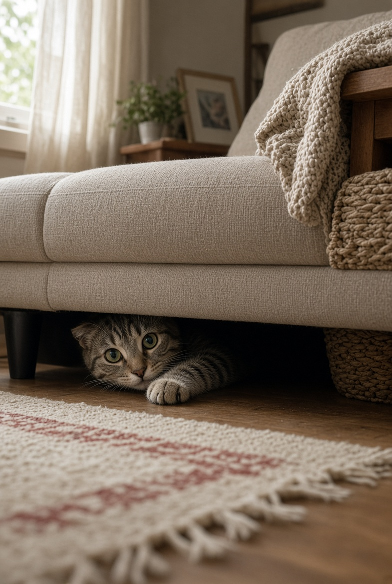
What to expect when adopting a rescue cat can feel exciting, confusing, and even a little scary at first. You may imagine bringing home a friendly cat that immediately curls up beside you. However, many rescue cats need time before they feel safe.
The good news is that patience can make a huge difference. A rescue cat may hide on the first day, eat very little, avoid touch, or quietly watch everything from under a bed. That does not always mean the cat dislikes you. Instead, the cat may simply need time to understand that your home is safe.
The ASPCA recommends giving a newly adopted pet a quiet place to decompress and keeping the first days calm and predictable.
This guide explains what to expect when adopting a rescue cat, from choosing the right cat to preparing your home, handling the first night, building trust, visiting the vet, and introducing other pets.
What to Expect When Adopting a Rescue Cat: Start With the Right Match
The first lesson about what to expect when adopting a rescue cat is that every cat has a different personality.
Some cats are playful and social. Others are quiet and cautious. Some enjoy sitting beside people but dislike being picked up.
Therefore, do not choose a cat only because of its appearance.
Ask the shelter or rescue:
- How does the cat behave around people?
- Does the cat enjoy being touched?
- Has the cat lived with children?
- Has the cat lived with dogs?
- Does the cat use a litter box?
- Does the cat hide often?
- Does the cat enjoy playing?
- Does the cat have known medical needs?
- What food does the cat currently eat?
- What type of litter does the cat use?
These answers can help you find a better match.
What to Expect When Adopting a Rescue Cat Before Adoption
Before adoption, learn as much as you can about the cat’s history.
A rescue organization may know whether the cat came from a previous home, a foster home, a shelter, or the street. However, the history may sometimes remain unknown.
That matters because a cat’s past can affect its behavior.
For example, a cat that once lived in a busy home may adjust quickly to family noise. On the other hand, a cat that spent a long time outdoors may need more time indoors.
Cornell University’s Feline Health Center recommends paying attention to signs such as sneezing, eye discharge, poor coat condition, unusual thinness, and other health concerns when choosing a cat.
Ask About the Rescue Cat’s Health
Another important part of what to expect when adopting a rescue cat involves medical care.
Ask for the cat’s records before you leave.
Ideally, you should know whether the cat has received:
- Vaccinations
- Spay or neuter surgery
- Flea treatment
- Parasite treatment
- Microchipping
- A health examination
- Any needed dental care
- Treatment for known illnesses
Do not assume every rescue cat has the same medical history.
Instead, ask questions and keep the paperwork.
Also, schedule a veterinary appointment after adoption. The ASPCA specifically recommends making a veterinarian appointment during the early adjustment period.
Prepare a Quiet Home Base
One of the best answers to what to expect when adopting a rescue cat is simple: do not give your new cat the entire house immediately.
Prepare one quiet room first.
This room can contain:
| Item | Why it helps |
| Litter box | Gives the cat a clear bathroom area |
| Food bowl | Creates a regular feeding spot |
| Water bowl | Supports daily hydration |
| Bed or blanket | Provides a comfortable resting place |
| Scratching post | Gives the cat a safe scratching option |
| Hiding box | Helps the cat feel protected |
| Toys | Encourages gentle play |
| Carrier | Provides a safe transport space |
The ASPCA also recommends creating a dedicated quiet space and removing hazards before bringing a new pet home.
Rescue Cat Safety Starts Before Arrival
Before your cat arrives, look around your home from a cat’s point of view.
Could the cat reach an electrical cord?
Could it squeeze behind an appliance?
Could it knock over a plant?
Could an open window allow it to escape?
These questions matter because frightened cats can move quickly.
The ASPCA advises adopters to secure doors and windows, manage cords, remove dangerous items, and check plants for toxicity.
Check Your Houseplants
Plants deserve special attention.
Some plants can seriously harm cats if they chew them.
For example, the ASPCA describes a case involving two adopted cats that chewed a peace lily. The cats developed drooling and stomach upset after eating the plant.
Therefore, check every plant before your cat arrives.
If you are unsure about a plant, move it somewhere your cat cannot reach it and ask your veterinarian about its safety.
What to Expect When Adopting a Rescue Cat on Day One
The first day can look very different from what you imagined.
Your cat may:
- Hide
- Refuse food for a short period
- Avoid eye contact
- Stay inside the carrier
- Meow more than expected
- Remain completely silent
- Explore at night
- Sleep for long periods
- Stay close to its hiding place
These behaviors can happen because the cat has suddenly entered a strange environment.
Therefore, avoid forcing the cat to interact with you.
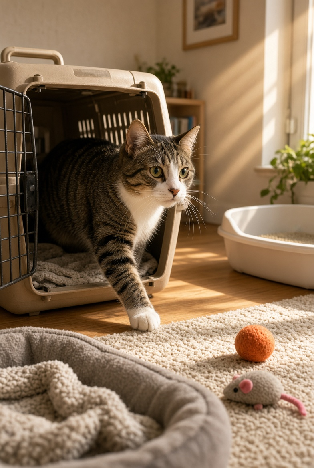
Open the carrier in the prepared room and allow the cat to come out when ready.
The First Night May Be Very Quiet
The first night often surprises new owners.
You may hear movement after everyone goes to bed. Your cat might explore when the house becomes quiet.
That is normal for many cautious cats.
Instead of chasing the cat for attention, leave food, water, litter, and a comfortable hiding place nearby.
Your goal is not to create instant friendship.
Your goal is to create safety.
What to Expect When Adopting a Rescue Cat That Hides
Hiding is one of the most common worries among new adopters.
However, hiding does not automatically mean something is wrong.
A cat may hide because:
- The house smells unfamiliar.
- New people feel scary.
- New sounds feel strange.
- The cat misses its previous surroundings.
- The cat feels safer in a small space.
Give the cat time.
You can sit quietly in the same room and read a book. You can speak softly without reaching toward the cat.
Over time, your calm presence can become familiar.
Build Trust Without Forcing Contact
Trust grows through repeated safe experiences.
Sit near your cat without touching it.
Blink slowly.
Speak gently.
Offer a small treat.
Then allow the cat to decide whether to approach.
Avoid grabbing a frightened cat from its hiding place unless safety or medical care requires it.
A cat that chooses to approach you can gain confidence faster than a cat that feels trapped.
What to Expect When Adopting a Rescue Cat During Week One
The first week may bring small improvements.
Your cat might begin eating when you are nearby.
Then, it may start playing.
Later, it may sit closer to you.
Eventually, it may rub against your leg.
These small changes matter.
The ASPCA uses a broader “3-3-3” adjustment guide: the first three days can involve stress, the next three weeks can bring more settling, and the first three months can reveal more of the pet’s personality.
Remember, this is a guide, not a strict deadline.
What to Expect When Adopting a Rescue Cat Around Food
Do not immediately change your cat’s food unless your veterinarian tells you to do so.
A sudden food change can upset the stomach.
Instead, ask the rescue what the cat currently eats.
Then, if you want to change food, discuss a gradual change with your veterinarian.
ASPCA guidance notes that age, activity, and health can affect what and how much a cat should eat.
Litter Box Habits Need Patience
Most cats naturally understand litter boxes, but stress can affect bathroom habits.
Place the box somewhere quiet and easy to reach.
Keep it clean.
Also, avoid putting it directly beside food and water.
If your cat suddenly stops using the litter box, do not simply punish the cat.
Instead, contact your veterinarian because bathroom changes can sometimes signal a health problem.
Give Your Cat Places to Hide
A hiding place is not a failure.
It can actually help a nervous cat feel secure.
Try a cardboard box, covered cat bed, or quiet corner.
You can also provide vertical spaces such as a cat tree or sturdy shelf.
The ASPCA notes that cats benefit from vertical space because it lets them move upward and create comfortable areas in the home.
What to Expect When Adopting a Rescue Cat With Other Pets
If you already have a cat or dog, slow introductions matter.
Do not put the animals together immediately.
Instead, keep the new cat in a separate room at first.
Allow the animals to smell each other through closed doors.
You can also exchange bedding between them.
Later, allow controlled visual contact.
The Humane Society of the United States recommends gradual cat introductions that include separation, scent exchange, and controlled visual meetings.
Introducing a Rescue Cat to a Dog
Dogs and cats can live happily together, but rushing the process can create fear.
Keep the dog under control during early meetings.
Give the cat a high place to escape.
Never allow the dog to chase the cat.
Reward calm behavior.
Furthermore, end the meeting before either animal becomes overwhelmed.
Introducing a Rescue Cat to Children
Children may become excited about a new pet.
However, teach them to respect the cat’s space.
Explain that a hiding cat needs quiet time.
Teach children not to pull the tail, chase the cat, squeeze the cat, or disturb it while eating.
Instead, encourage gentle play with safe toys.
What to Expect When Adopting a Rescue Cat at the Vet
A veterinary visit should become part of your early plan.
Bring the adoption records with you.
Your veterinarian can review vaccinations, parasite control, diet, weight, dental health, and other needs.
Cornell also advises veterinary attention when a newly adopted cat has health problems.
The exact timing can depend on the cat’s health and the rescue’s instructions, so ask your veterinarian.
Rescue Cat Costs Can Surprise You
Adoption fees are only one part of the cost.
Your budget may include:
- Food
- Litter
- Litter boxes
- Scratching posts
- Toys
- Carrier
- Veterinary visits
- Vaccines
- Parasite prevention
- Emergency care
- Dental care
- Pet insurance or savings
Therefore, create a monthly pet budget before adoption.
An emergency fund can also reduce stress when unexpected veterinary bills appear.
Advantages of Adopting a Rescue Cat
There are many benefits to adoption.
Emotional benefits
A rescue cat can become a close companion.
Many owners enjoy the daily routine of feeding, playing, and caring for a pet.
Practical benefits
Adult cats can be a good choice for people who do not want the constant energy of a young kitten.
Animal welfare benefits
Adoption gives an animal another chance at a stable home.
The ASPCA explains that adoption also frees shelter space and resources for other animals needing help.
Disadvantages You Should Understand
Responsible adoption also means understanding the challenges.
A rescue cat may:
- Need weeks to adjust.
- Have unknown history.
- Arrive with health concerns.
- Fear certain people.
- Scratch furniture.
- Wake you at night.
- Need expensive treatment.
- Struggle with another household pet.
These challenges do not mean adoption was a mistake.
However, you should understand them before making a long-term commitment.
What to Expect When Adopting a Rescue Cat With Unknown History
Sometimes the rescue does not know exactly what happened before the cat arrived.
That can feel frustrating.
Still, you can focus on the present.
Watch what the cat does now.
Does it enjoy play?
Does it approach people?
Does it react strongly to loud sounds?
Does it enjoy other cats?
Current behavior can help you understand the cat better than guessing about its past.
Real-Life Example: A Cat That Needed Time
Consider a common adoption scenario.
A family adopts an adult rescue cat named Milo.
On day one, Milo hides behind a sofa.
The family worries that he does not like them.
Instead of pulling him out, they create a quiet room and keep a regular feeding schedule.
During the first week, Milo begins eating while the family sits nearby.
During the second week, he starts playing with a toy.
By the third week, he begins sitting beside one family member.
The lesson is simple: progress does not always look dramatic.
Sometimes progress means a frightened cat feels safe enough to stay in the same room.
Case Study: A Second Cat Joins the Family
The ASPCA shared a recent real adoption story involving an 8-month-old kitten named Router.
His adopters, Courtney S. and Max, already had a 9-year-old cat named Elliott. They hoped the two cats would eventually become friends, but they understood that the relationship might take time.
This is an important lesson for adopters.
Do not expect two cats to become best friends immediately.
Instead, focus on safe introductions and individual comfort.
Expert Advice: Think in Small Steps
Animal welfare experts often emphasize patience during adoption.
The ASPCA recommends calm routines, patience, space, positive reinforcement, and gradual bonding during the adjustment period.
A useful rule is:
Do less, observe more.
If your cat wants space, give space.
If your cat approaches, respond gently.
If your cat becomes scared, reduce the pressure.
What to Expect When Adopting a Rescue Cat After One Month
After a month, you may notice more personality.
Your cat may have favorite:
- Sleeping places
- Toys
- People
- Foods
- Windows
- Play times
- Scratching spots
You may also discover behaviors that you did not see at the shelter.
That is normal.
Shelter behavior does not always show how a cat behaves in a permanent home.
The Three-Month Personality Reveal
By three months, many cats have developed a stronger routine.
Your rescue cat may greet you at the door.
It may sleep near you.
It may ask for food at a certain time.
It may learn your daily habits.
However, some cats take longer.
Do not compare your cat’s progress with another cat’s progress.
What to Expect When Adopting a Rescue Cat That Scratches
Scratching is normal cat behavior.
Your goal should be to provide better scratching options rather than expecting the cat never to scratch.
Place scratching posts near furniture your cat already targets.
Try different textures.
Reward the cat for using the post.
Also, make unwanted areas less attractive while you teach the preferred habit.
Play Can Build a Stronger Bond
Play is more than entertainment.
It can help your cat exercise, explore, and interact with you.
Try wand toys, small balls, and other safe cat toys.
However, do not use your hands as toys.
A kitten that learns to attack hands may continue that habit as an adult.
Nighttime Behavior May Change
Cats can be active during the night.
A newly adopted cat may explore your home after bedtime because the house feels quieter.
Therefore, do not panic if you hear movement at 2 a.m.
A regular play session before bedtime can help create a calmer routine.
What to Expect When Adopting a Rescue Cat and Working Full-Time
A rescue cat can fit into many working households.
Cats generally do not need constant human attention.
Still, they need daily care, interaction, clean litter, fresh water, food, and mental stimulation.
If you work long hours, provide safe toys and comfortable resting areas.
For a kitten, however, your schedule may require more planning than it would for a calm adult cat.
Apartment Living Can Work
You do not need a huge house to provide a good cat home.
A safe apartment can work well when you provide:
- Vertical space
- Scratching areas
- Hiding places
- Clean litter boxes
- Safe windows
- Daily play
- Food and water
The key is not simply floor size.
Instead, think about how much safe, useful space your cat can access.
What to Expect When Adopting a Rescue Cat From a Foster Home
Foster-based rescues can offer useful behavior information.
A foster parent may know how the cat behaves around:
- Children
- Dogs
- Other cats
- Visitors
- Household noise
- Food
- Litter
- Toys
That information can make matching easier.
Therefore, ask for detailed foster notes when possible.
Watch for Stress Signals
Learn your cat’s body language.
A stressed cat may flatten its ears, crouch, hide, hiss, growl, or keep its body tense.
Do not punish these signs.
Instead, treat them as information.
Your cat is telling you that it needs more distance.
Watch for Health Warning Signs
Contact a veterinarian if your newly adopted cat shows concerning symptoms such as repeated vomiting, severe diarrhea, breathing trouble, extreme weakness, serious injury, or other sudden changes.
Also, contact your vet if you have concerns about eating, drinking, urination, or bowel movements.
A rescue organization can also tell you what symptoms require urgent follow-up.
What to Expect When Adopting a Rescue Cat Emotionally
You may feel guilty if your cat does not bond with you immediately.
Do not blame yourself.
A rescue cat does not understand that you are trying to help.
It only knows that its surroundings changed.
Therefore, trust grows through repetition.
Every calm meal, quiet conversation, gentle play session, and safe night can add another positive experience.
Create a Simple Daily Routine
Cats often benefit from predictable routines.
For example:
7:00 a.m. — Breakfast
7:15 a.m. — Short play session
12:00 p.m. — Quiet rest
6:00 p.m. — Dinner
7:00 p.m. — Play and bonding
10:00 p.m. — Calm bedtime routine
You can change these times to fit your life.
Consistency matters more than the exact clock time.
Adoption Checklist for the First 24 Hours
Use this quick checklist:
- Prepare one quiet room.
- Set up food and water.
- Prepare the litter box.
- Add a hiding place.
- Add a scratching post.
- Remove unsafe plants.
- Secure windows and doors.
- Keep other pets separated.
- Bring adoption records home.
- Let the cat explore at its own pace.
- Avoid forced handling.
- Plan veterinary care.
What to Expect When Adopting a Rescue Cat: Quick Comparison
| Stage | What you may see | What you should do |
| First hours | Hiding or silence | Give space |
| First night | Exploration | Keep the room quiet |
| First week | Small trust signals | Maintain routine |
| First month | More personality | Expand access slowly |
| First three months | Stronger routine | Continue bonding |
| Long term | Individual personality | Keep learning your cat |
These stages are general guides, not strict rules.
Common Mistakes New Adopters Make
Avoid these mistakes:
- Giving the cat the entire house immediately.
- Forcing cuddles.
- Introducing pets too quickly.
- Changing food suddenly.
- Ignoring unusual health signs.
- Leaving windows unsecured.
- Punishing hiding.
- Expecting instant affection.
- Skipping veterinary care.
- Buying supplies without considering the cat’s preferences.
A slow start usually creates a smoother transition.
What to Expect When Adopting a Rescue Cat: Supplies Chart
| Need | Basic choice | Helpful upgrade |
| Food | Quality cat food | Food recommended by your vet |
| Water | Stable bowl | Water fountain |
| Litter | Standard box | Large easy-entry box |
| Bed | Soft blanket | Covered cat bed |
| Scratching | Cardboard post | Tall scratching tower |
| Play | Wand toy | Several rotating toys |
| Hiding | Cardboard box | Cat tunnel or covered bed |
| Travel | Secure carrier | Sturdy hard-sided carrier |
You do not need to buy everything at once.
Start with the basics and learn what your cat likes.
Address and Reliable Adoption Resources
If you want trustworthy adoption and cat-care information, start with established animal welfare organizations.
The ASPCA’s current mailing address is:
American Society for the Prevention of Cruelty to Animals (ASPCA)
424 E. 92nd St.
New York, NY 10128-6804
This address is included for reference; local adopters should contact their own shelter or rescue for local adoption rules and services.
You can also explore the ASPCA’s adoption and care resources here: ASPCA Adoption Tips and ASPCA General Cat Care.
For veterinary information, Cornell University’s Feline Health Center provides cat-care guidance: Cornell Feline Health Center.
Updated 2026 Advice for New Rescue Cat Owners
As of August 2026, current ASPCA adoption guidance continues to stress preparation, a quiet starting space, patience, routine, gradual bonding, and veterinary care.
The ASPCA also highlighted shelter-cat adoption efforts in 2026, including a campaign goal to help 325 cats and kittens find homes by July 31, 2026.
The wider lesson is useful: adoption helps individual cats while also creating space and resources for other animals.
FAQs: What to Expect When Adopting a Rescue Cat
- What should I expect when adopting a rescue cat for the first time?
Expect an adjustment period. Your cat may hide, eat less at first, explore at night, or avoid touch. Give it time and a quiet space.
- How long does it take a rescue cat to trust you?
Some cats trust people within days. Others need weeks or months. Let your cat control the speed of the relationship.
- Should I let my rescue cat roam the whole house?
Usually, starting with one quiet room can make the transition easier. Gradually increase access as your cat becomes comfortable.
- Why is my rescue cat hiding?
Your home has unfamiliar sounds, smells, people, and objects. Hiding can help a nervous cat feel safe.
- Should I pull my rescue cat out of hiding?
Generally, no. Give the cat a safe hiding area and allow it to come out voluntarily unless a safety or medical issue requires intervention.
- How long should I keep a rescue cat in one room?
There is no single number that works for every cat. Keep the cat in its home base until it shows signs of comfort, then expand access gradually.
- What should I feed my newly adopted cat?
Start with the food the rescue currently uses when practical. Ask your veterinarian before making major diet changes.
- Should I take my rescue cat to a vet?
Yes. Arrange veterinary care based on the cat’s medical records and your veterinarian’s advice.
- Can a rescue cat live with another cat?
Yes, many can. However, introductions should happen slowly and with separation at first.
- Can a rescue cat live with a dog?
Yes, but the animals need gradual introductions, supervision, and safe escape areas for the cat.
- Is hiding for several days normal?
It can happen, especially with nervous cats. However, contact your veterinarian or rescue if you are concerned about eating, drinking, bathroom use, or other health signs.
- How do I make my rescue cat feel safe?
Provide food, water, litter, hiding areas, scratching options, quiet time, and a predictable routine.
- Should I let children hold the new cat?
Only if the cat is comfortable and the child can handle the cat gently. Never force interaction.
- Why does my rescue cat hiss at me?
Hissing usually communicates discomfort or fear. Give the cat more space instead of punishing the behavior.
- Will my rescue cat’s personality change?
Possibly. A quiet shelter cat may become playful and social after feeling secure at home.
- How can I bond with a rescue cat?
Use calm play, treats, gentle talking, and predictable routines. Let your cat approach you instead of forcing contact.
- What if my rescue cat scratches furniture?
Provide attractive scratching posts near the furniture. Reward the cat for using them.
- Can I leave my rescue cat alone while I work?
Many adult cats can handle normal work schedules, but they still need daily care, interaction, enrichment, and monitoring.
- Should I adopt a kitten or an adult rescue cat?
Choose based on your lifestyle. An adult cat may have a more established personality, while kittens often require more supervision and play.
- What is the most important thing to remember?
Patience is the key. Your rescue cat does not need a perfect owner. It needs a safe, kind, steady home.
What to Expect When Adopting a Rescue Cat: Final Takeaway
Ultimately, what to expect when adopting a rescue cat is a journey rather than a single event.
Your new cat may not cuddle you on day one.
It may hide.
It may watch you from across the room.
Then, one morning, it may walk over and rub against your leg.
That tiny moment can feel huge.
Give your rescue cat time to learn your home, your voice, your routine, and your kindness. Keep the environment safe, introduce other pets slowly, maintain good litter habits, arrange proper veterinary care, and celebrate small improvements.
Most importantly, remember that trust grows through repeated safe experiences.
When you give a rescue cat patience and stability, you are not simply bringing home a pet. You are giving an animal the chance to build a new life.