

How to bond with a rescue cat starts with one simple idea: do not rush the relationship. A rescue cat may have lived through a shelter stay, a lost home, a move, or an uncertain past. Therefore, your new cat needs time to learn that your home is safe.
Some rescue cats walk into a new home and ask for attention immediately. Others hide behind furniture for days or even longer. Both reactions can be normal. International Cat Care notes that hiding, reduced play, changes in eating, and other behavior changes can signal stress in cats.
The goal is not to make your cat love you on day one. Instead, the goal is to create small, positive experiences every day.
How to Bond With a Rescue Cat Begins With Patience
The first step is patience.
Your rescue cat has entered a strange place with new smells, sounds, people, furniture, and routines. Consequently, even a friendly cat may feel unsure.
Sit quietly nearby. Let your cat decide when to come closer. Avoid chasing, grabbing, or pulling the cat from a hiding place.
Give Your Rescue Cat One Safe Room
Start with a quiet room if possible.
Place food, water, a litter box, bedding, toys, and a safe hiding place inside. Keep the litter box away from food and water.
A smaller space can feel easier for a nervous cat to understand.
Let the First Day Stay Quiet
The first day should feel boring.
That is actually a good thing.
Avoid inviting several people over. Keep loud music low. Also, delay unnecessary handling until your cat becomes more comfortable.
Your rescue cat does not need a welcome party. Your cat needs peace.
How to Bond With a Rescue Cat Through Routine
Cats often feel safer when life becomes predictable.
Feed your cat around the same times each day. Clean the litter box regularly. Play at similar times, too.
Over time, your cat can learn, “This person brings food, play, calm, and safety.”
That repeated pattern can become the foundation of trust.
Use Your Voice Before Your Hands
Talk softly before you try to touch your cat.
For example, say your cat’s name gently when you enter the room. Then sit down and read, work, or simply relax.
Your voice becomes a familiar sound.
Eventually, your cat may begin looking toward you when you speak.
Learn the Cat’s Personal Language
Cats communicate through their ears, eyes, tail, body position, and movement.
A relaxed cat may have a loose body and natural ear position. However, flattened ears, a tucked tail, a crouched body, or very wide eyes can suggest fear or discomfort.
Therefore, watch the whole body instead of focusing on one signal.
How to Bond With a Rescue Cat Without Forced Touch
Touch should be an invitation, not a demand.
Put your hand near your cat without moving toward the face. Let the cat sniff you.
If the cat moves closer, that is useful information.
If the cat backs away, give space.
This simple choice can make your cat feel more in control.
Try the Slow Blink
A slow blink can become a gentle social signal.
Look toward your cat without staring. Slowly close your eyes, pause briefly, and open them again.
Do not expect an instant response.
Still, if your cat gives a slow blink back, you can repeat the behavior later.
Make Food Part of the Friendship
Food can create positive connections.
Start by placing a favorite treat near your cat. Later, place it a little closer to you if the cat remains comfortable.
Do not use hunger to force interaction.
Instead, let your cat learn that good things happen when you are nearby.
Build Trust With Tiny Treat Steps
Small steps often work better than dramatic gestures.
For example:
- Treat across the room.
- Treat near your chair.
- Treat beside your hand.
- Treat after gentle contact.
- Treat after a short play session.
Move back one step if your cat becomes nervous.
How to Bond With a Rescue Cat Through Play
Play is one of the easiest ways to connect without demanding physical contact.
Try a wand toy, feather toy, or another safe interactive toy.
Move the toy like prey rather than waving it wildly in your cat’s face.
Let your cat chase, watch, hide, and pounce.
Create a Daily Five-Minute Play Ritual
You do not need an hour of play.
Instead, begin with five calm minutes.
Play at roughly the same time each day. Then finish with a small reward or meal when suitable.
This creates a simple pattern that your cat can recognize.
Give Your Cat Hiding Places
A hiding place is not a failure.
It is often a coping tool.
A cardboard box, covered bed, cat tunnel, or quiet corner can give your cat control over distance.
International Cat Care identifies hiding as one possible sign of longer-term distress, especially when it appears with other changes in behavior.
How to Bond With a Rescue Cat When It Hides
Do not pull your cat out of a safe hiding place just because you want contact.
Instead, sit nearby.
You can speak softly, read a book, or work quietly.
Eventually, your cat may peek out.
That small moment can be more meaningful than a forced cuddle.
Keep Your Movements Predictable
Fast movements can frighten an uncertain cat.
Walk normally, but avoid suddenly reaching over your cat.
When possible, approach from the side instead of directly from above.
Most importantly, give your cat an easy path to move away.
Respect the No-Touch Signal
A cat may enjoy petting for ten seconds and then want to stop.
Watch for changes such as tail movement, skin twitching, turning away, tense muscles, or ears moving backward.
When your cat says “enough,” stop.
Respecting that boundary can make future contact easier.
Use a Consistent Feeding Station
Choose one quiet feeding area.
Keep bowls clean and make changes slowly.
If your rescue cat already eats a certain food comfortably, ask the shelter or rescue about the previous diet before changing it.
A sudden food change can add another adjustment to an already stressful period.
How to Bond With a Rescue Cat at Mealtime
Mealtime can become a quiet connection ritual.
Sit several feet away while your cat eats.
Do not stare at the cat or reach toward the bowl.
Over several days, your cat may begin to associate your presence with something pleasant.
Give the Cat Choice During Petting
Once your cat willingly approaches, offer one or two gentle strokes.
Many cats enjoy contact around the cheeks, chin, or head. However, every cat has individual preferences.
Stop while the experience is still positive.
That way, your cat may return for more.
Use Your Cat’s Name Carefully
Use the name during positive moments.
Say it before food, play, treats, or calm interaction.
Avoid using the name mainly during stressful events.
With repetition, your cat can learn that the sound predicts something good.
How to Bond With a Rescue Cat Through Shared Quiet Time
You can bond without touching.
Sit on the floor while your cat rests nearby.
Watch television quietly. Read a book. Work on a laptop.
This teaches your cat that your presence does not always mean handling.
That lesson can be especially useful for shy cats.
Build a Cat-Friendly Home Base
Create several safe zones around your home.
Include resting areas, scratching surfaces, toys, and elevated spaces where practical.
Cats often like to observe their surroundings from a safe position.
Therefore, a cat tree or secure elevated perch may become an important confidence-building spot.
Keep Children Calm Around the Cat
Children may become excited about a new pet.
However, teach them to sit quietly and let the cat approach.
No chasing. No pulling the tail. No forced hugs.
This protects the cat and helps children learn respectful pet care.
Introduce Other Pets Slowly
Do not immediately place a rescue cat face-to-face with another animal.
Start with separate spaces.
Later, controlled scent sharing can help both animals become familiar with each other.
A gradual introduction can reduce unnecessary stress.
How to Bond With a Rescue Cat After a Scary Moment
Trust can wobble after a loud noise, vet visit, accident, or sudden movement.
Do not punish the cat.
Return to calm routines.
Give your cat space, food, water, and a safe place to rest.
International Cat Care recommends reducing avoidable stress around veterinary care and handling.
Watch for Real Signs of Progress
Progress may look very small.
Your cat may:
- Stay in the room when you enter.
- Eat while you are nearby.
- Blink slowly at you.
- Sit with its back toward you.
- Approach your chair.
- Play in your presence.
- Sleep in an open area.
- Rub against your legs.
These small actions can show growing comfort.
How to Bond With a Rescue Cat That Avoids You
Do not take avoidance personally.
A rescue cat may have learned that humans are unpredictable.
Instead, become predictable.
Enter calmly. Feed consistently. Speak gently. Offer play. Respect space.
Over time, repetition can replace uncertainty with familiarity.
Give the Cat a Choice of Sleeping Spots
Offer more than one comfortable resting place.
One spot may be hidden. Another may be open.
A third could be elevated.
Your cat can then choose according to mood and comfort.
Choice is especially useful during the early adjustment period.
How to Bond With a Rescue Cat Using Scent
Cats rely heavily on smell.
Therefore, avoid filling the home with strong new scents during the first days.
You can also place a soft item carrying your normal scent near a sleeping area.
Do not force the cat to interact with it.
Make Scratching Part of Normal Life
Scratching is normal cat behavior.
Place scratching posts near sleeping areas or places where your cat already scratches.
Reward use with praise or a small treat.
Do not punish scratching.
Instead, make the correct scratching surface more attractive.
Real-Life Example: Maya and Her Shy Rescue Cat
Consider Maya, a first-time rescue cat owner.
Her adult cat, Luna, hid under a bed during the first few days. Maya initially thought Luna disliked her.
Instead of pulling Luna out, Maya sat on the floor for ten minutes each evening.
She talked quietly and left treats several feet away.
During the second week, Luna began sitting near the bedroom doorway.
Later, Luna approached Maya during playtime.
The important change was not one magical moment. It was the repeated experience of safety.
This example reflects a common bonding pattern, but every cat can move at a different pace.
Case Study: A Cat That Needed More Space
A useful second example involves a rescue cat that became tense whenever visitors arrived.
The family initially encouraged the cat to meet everyone.
That increased the cat’s hiding.
They changed the plan.
The cat received a quiet room, a covered bed, and a visitor-free retreat.
Guests stopped approaching the cat.
After several weeks, the cat began choosing to enter shared rooms.
The lesson is simple: reducing pressure can sometimes create more social behavior.
A Simple 30-Day Bonding Plan
| Time | Main goal | What to do | Progress sign |
| Days 1–3 | Safety | Quiet room and routine | Eating or resting |
| Days 4–7 | Familiarity | Talk and sit nearby | Watches you calmly |
| Week 2 | Positive contact | Treats and play | Approaches voluntarily |
| Week 3 | Trust | Short petting sessions | Stays nearby |
| Week 4 | Confidence | More home access | Explores freely |
This table is a practical guide, not a medical or scientific deadline. ASPCA adoption guidance says pets can continue adjusting during the first three months while owners learn their likes, dislikes, fears, and needs.
Advantages of Building Trust Slowly
Slow bonding has several benefits.
First, it gives the cat control.
Second, it lets you learn the cat’s body language.
Third, it reduces unnecessary pressure.
Fourth, it can create stronger daily habits.
Finally, it allows the relationship to grow naturally.
The ASPCA recognizes that strong human-companion animal bonds can benefit both people and animals.
Disadvantages of Rushing the Relationship
Rushing can create problems.
Your cat may hide more. Your cat may avoid your hand. Your cat may become tense during handling.
Also, people sometimes mistake fear for dislike.
Therefore, do not judge the relationship based on the first few days.
A quiet cat is not necessarily an unhappy cat.
Expert Advice: Read the Whole Body
International Cat Care stresses the value of understanding feline body language and adapting interactions to the individual cat.
That means you should look at posture, ears, eyes, tail, movement, and the situation together.
For example, a cat sitting still may look calm at first. However, a crouched body, lowered head, tucked tail, and tense posture may show discomfort.
How to Bond With a Rescue Cat During Vet Care
A veterinary visit is important, even when your cat seems healthy.
Ask your veterinarian about a wellness exam, vaccines, parasite prevention, dental care, and other needs.
Use a suitable carrier and make future carrier trips easier through gradual training.
International Cat Care recommends cat-friendly veterinary practices and planning ahead to reduce travel and clinic stress.
Know When Stress Needs Professional Help
Hiding alone does not always mean something is seriously wrong.
However, major changes in eating, drinking, grooming, toileting, activity, or general behavior deserve attention.
International Cat Care lists reduced food or water intake, hiding, over-grooming, toileting outside the litter box, and other changes among possible signs of longer-term distress.
If you are worried, contact a veterinarian.
Keep an Easy Bonding Journal
Write down simple observations.
For example:
Monday: Ate while I sat nearby.
Wednesday: Played for three minutes.
Friday: Came within two feet of me.
This helps you see progress that might otherwise be easy to miss.
It also gives you useful information to share with your veterinarian if behavior changes.
How to Bond With a Rescue Cat When Progress Feels Slow
Slow progress is still progress.
Maybe your cat moved from hiding under the bed to hiding behind a chair.
That is a change.
Maybe your cat stayed in the room for five minutes longer.
That matters too.
Do not compare your cat with another rescue cat online.
Frequently Asked Questions
- How long does it take to bond with a rescue cat?
It varies widely. Some cats become friendly quickly, while others need weeks or months. Let your cat set the pace.
- How to bond with a rescue cat that hides?
Sit quietly nearby and provide food, water, toys, and safe hiding spaces. Do not pull the cat out.
- Should I pick up my rescue cat?
Only when your cat appears comfortable with handling. Avoid forcing the cat into your arms.
- Should I sleep near my rescue cat?
You can spend quiet time nearby, but you do not need to sleep beside the cat.
- Why does my rescue cat avoid eye contact?
Direct staring can feel threatening to some cats. Try looking softly and using slow blinks.
- Should I use treats for bonding?
Yes, treats can create positive associations when you use them safely and in suitable amounts.
- How often should I play with my rescue cat?
Short, regular sessions often work well. Adjust the amount to your cat’s age, health, and energy.
- Why does my rescue cat hide at night?
Cats naturally become active during different parts of the day. A nervous cat may also feel safer exploring when the home is quiet.
- Should I leave the radio or television on?
Soft background sound may be fine if your cat remains relaxed. However, avoid loud or sudden noise.
- Can I bond with an older rescue cat?
Absolutely. Older cats can form deep relationships with people when they receive patience and respectful care.
- How to bond with a rescue cat that does not like petting?
Use play, food, your voice, and quiet company instead. Physical touch is not the only way to build trust.
- Why does my cat approach me and then run away?
Your cat may be curious but still uncertain. Let the cat control the distance.
- Should I follow my cat when it walks away?
Usually, no. Let the cat have space and return when ready.
- Can another pet make bonding harder?
It can, especially if introductions happen too quickly. Use separate spaces and gradual introductions.
- Should children pet the rescue cat?
Only when the cat approaches willingly and the child can remain calm and gentle.
- What if my rescue cat growls at me?
Stop moving toward the cat and give it space. Growling can be a warning that the cat feels uncomfortable.
- Can a rescue cat forget its previous owner?
Cats have individual histories and experiences, so avoid making assumptions about what your cat remembers. Focus on building safety in the present home.
- How to bond with a rescue cat after a bad first week?
Start again with simple routines. Reduce pressure and return to quiet interaction, food, play, and safe space.
- When should I call a veterinarian?
Contact a veterinarian if you notice worrying changes in eating, drinking, litter habits, grooming, movement, or general health.
- What is the biggest mistake new rescue cat owners make?
Trying to create closeness too quickly is one common mistake. Give the cat choices and let trust grow.
Useful External Resources for Rescue Cat Owners
For reliable information, use established animal welfare and feline-care organizations.
- ASPCA adoption tips — practical guidance for helping adopted pets adjust during their first months.
- International Cat Care — feline behavior, health, welfare, and cat-friendly care resources.
- ASPCA — animal welfare and pet-care resources.
International Cat Care address: Place Farm, Tisbury, Wiltshire, SP3 6LW, United Kingdom. Its contact information also lists the Nadder Centre, Tisbury, Wiltshire, SP3 6HJ.
Updated Rescue Cat Bonding Checklist
Before expecting your cat to become affectionate, check these basics:
- Fresh water is available.
- Food is offered consistently.
- The litter box is clean.
- The cat has safe hiding places.
- The home is reasonably quiet.
- You avoid forced handling.
- You offer daily play.
- You respect body-language signals.
- You provide scratching options.
- You arrange appropriate veterinary care.
- You give the cat time.
If most answers are yes, you are already building a strong foundation.
The Biggest Secret to Lasting Trust
The biggest secret is not a special toy, expensive bed, or perfect treat.
It is consistency.
Your cat needs to discover that tomorrow looks much like today.
You enter calmly.
You provide food.
You clean the litter box.
You offer play.
You respect boundaries.
Then you repeat the process.
That predictability can be powerful for an animal that has experienced change.
How to Bond With a Rescue Cat for Life
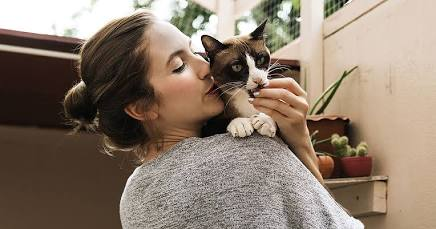
The best relationship grows through thousands of tiny moments.
Your cat may eventually sleep beside you, follow you around the house, greet you at the door, or curl up on your lap.
However, affection looks different for every cat.
Some cats become lap cats. Others prefer sitting beside you. Some show love by following you from room to room.
So, do not measure success by how much your cat cuddles.
Measure success by comfort, trust, choice, and relaxed behavior.
Conclusion
Learning how to bond with a rescue cat is really about learning how to become a safe and predictable person in your cat’s world.
Start small. Give your cat a quiet home base. Keep a steady routine. Use food and play to create positive moments. Most importantly, respect your cat’s choice to come closer or move away.
Remember that the first day does not define the relationship. The first week does not define it either.
According to ASPCA adoption guidance, the first three months can still be a period of adjustment, learning, bonding, and routine building.
So be patient.
One quiet evening can become two. One treat can become a daily ritual. One game can become a favorite routine.
And eventually, the cat that once hid from you may walk across the room, sit beside you, and quietly decide that you are home.